
Unlimited Script Coverage Under $100: The Future of Affordable Screenplay Development

Updated on


 @finalbitai
 @finalbitai
For decades, script coverage has quietly shaped the future of film and television. It influences which stories reach producers, which projects get greenlit, and which ideas secure financing. Yet despite its importance, the coverage process remains expensive, inconsistent, and inaccessible — especially for the people who need it most.
Writers, producers, and small production companies share the same challenge: script development is costly, slow, and limited by budget rather than creativity.
Today, that model no longer works.
The industry needs something more flexible. More scalable. More aligned with how modern filmmakers actually create.
That’s where unlimited script coverage under $100 changes everything.
The High Cost of Traditional Script Coverage
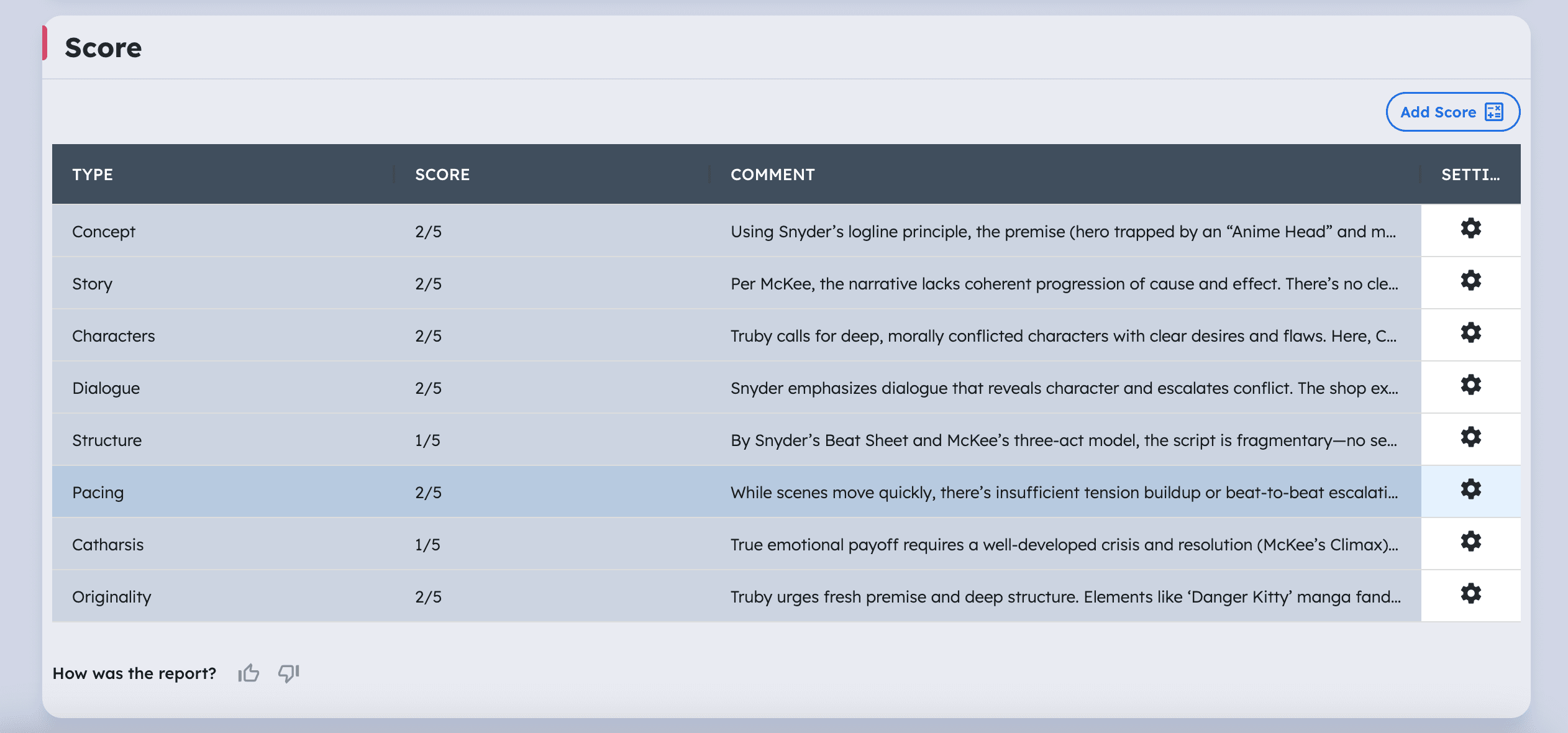
The standard market price for professional script coverage ranges from $80 to $250 per script. If a writer revises a draft — they pay again. If a producer needs coverage on multiple submissions — they pay again. If a production company manages a full slate — they absorb thousands in annual costs.
This creates an environment where development becomes restricted:
Writers hesitate to rewrite because each draft is another expense
Producers must choose which projects receive notes and which are ignored
Indie filmmakers cannot afford consistent feedback
Small production companies limit their development capacity because every read is a budget decision
A single screenplay often goes through five to ten drafts. At traditional coverage prices, that is simply unsustainable.
Why This Problem Hurts the Entire Industry
When coverage is expensive, the consequences ripple through the creative pipeline.
For Writers
Limited feedback means slower improvement
Scripts are submitted before they’re ready
Development stalls due to cost, not creativity
For Producers
Too many submissions, not enough affordable evaluations
Difficult to identify viable projects early
Budget pressure limits development quality
For Small Production Companies
Coverage becomes a major annual expense
Multi-script slates become financially heavy
Fewer projects receive the attention they deserve
Scripts don’t fail because they lack potential — they fail because rewriting is cost-prohibitive. The Solution: Unlimited Script Coverage for Under $100
A modern development pipeline requires accessibility, speed, and constant iteration.
Unlimited script coverage — unlimited scripts, unlimited pages, unlimited revisions — all for under $100 per year delivers exactly that.
It removes the friction that has held back the industry for decades.
How it transforms development:
Submit any script, at any length
Receive professional feedback
Revise and resubmit as many times as needed
Develop multiple projects at once
Support writers through every draft
Evaluate entire development slates affordably
No more per-script charges. No more per-page limits. No more choosing one project over another due to cost.
FinalBit Unlimited Coverage empowers teams of any size to develop scripts with the same confidence, speed, and consistency as major studios.
Why Unlimited Coverage Works for Writers, Producers, and Companies
Writers gain the freedom to iterate
Revisions become stress-free. Writers can finally rewrite without worrying about paying for each draft.
Producers gain clarity
They can evaluate dozens of submissions quickly and affordably, making better, data-informed decisions.
Production companies gain scalability
Development becomes predictable. Budgets become stable. More scripts receive attention. More projects advance.
The entire creative pipeline becomes faster and stronger
Unlimited coverage helps teams identify potential earlier, shape stories more effectively, and prepare stronger projects for investors and partners.