
How to Break Down a Script: Best Practices for Film & TV Production (2026 Guide)
Updated on


 @finalbitai
 @finalbitai
Breaking down a script is one of the most critical steps in film and television production. A well-executed script breakdown turns a screenplay into a clear, actionable production plan—covering everything from cast and locations to props, costumes, scheduling, and budget implications.
Yet, despite its importance, script breakdown is still one of the most time-consuming and error-prone processes in pre-production. In this guide, we’ll cover how to break down a script step by step, industry best practices, and how modern automatic script breakdown tools are transforming workflows in 2026.
What Is a Script Breakdown?
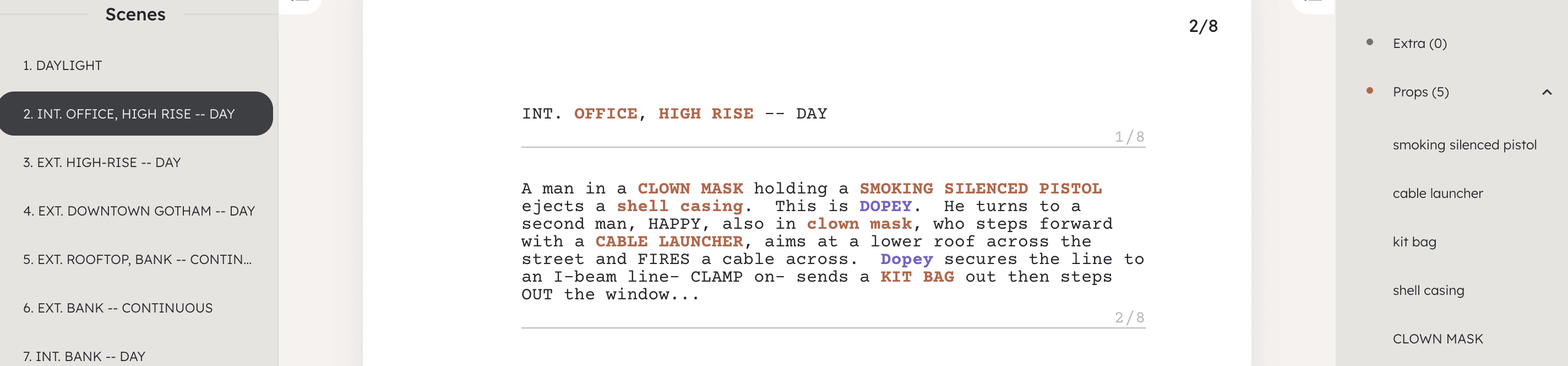
A script breakdown is the process of analyzing a screenplay scene by scene to identify every production element required to shoot it. Each scene is “broken down” into categorized components such as:
Characters
Locations
Props
Costumes
Special effects
Stunts
Vehicles
Extras
Day/Night requirements
Traditionally, this process is handled manually using colored highlights, breakdown sheets, and spreadsheets. While effective, manual breakdowns are slow, repetitive, and highly dependent on individual interpretation.
Why Script Breakdown Matters in Pre-Production
A proper script breakdown directly impacts:
Scheduling accuracy
Budget forecasting
Crew coordination
Department planning
Production efficiency
Missed or incorrectly tagged elements can cause delays, cost overruns, and on-set confusion. Inconsistent breakdowns across departments often lead to miscommunication—especially on larger productions or fast-moving indie shoots.
Traditional Script Breakdown Process (Manual Method)
Before automation, script breakdown followed a familiar pattern:
1. Read the Script Multiple Times
The first read focuses on story. The second and third reads identify production elements.
2. Identify Scene Boundaries
Each scene is defined by:
INT./EXT.
Location
Time of day
3. Highlight Elements by Category
Using standard color codes, filmmakers mark:
Cast
Props
Wardrobe
Set dressing
Special requirements
4. Transfer Data to Breakdown Sheets
Each scene’s elements are logged into breakdown sheets, which later feed scheduling and budgeting tools.
5. Review & Revise
Breakdowns are revised multiple times as scripts evolve.
Time cost: A single feature-length screenplay typically takes 8-10 hours to break down manually.
Common Problems With Manual Script Breakdowns
Despite being industry standard for decades, manual breakdowns come with clear drawbacks:
Slow: Repetitive work that consumes valuable creative time
Error-prone: Missed props or characters can derail production
Inconsistent: Different crew members break down scripts differently
Hard to update: Script changes require rework across multiple documents
In modern productions—especially with tighter timelines—these inefficiencies are no longer sustainable.
Best Practices for Script Breakdown (Modern Approach)
Whether working manually or using automated tools, these best practices apply universally.
1. Break Down by Scene, Not Pages
Scenes are the true production unit. Organizing by scene ensures clarity for scheduling, shooting order, and department coordination.
2. Use Standardized Element Categories
At minimum, track:
Characters
Locations
Props
Costumes
Extras
Vehicles
Special effects
Stunts
Consistency across departments is essential.
3. Tag Day/Night and Interior/Exterior Clearly
These details directly affect lighting setups, crew needs, and shooting schedules.
4. Leave Notes Per Scene
Context matters. Add notes for:
Emotional beats
Special handling requirements
Director or department-specific considerations
5. Prepare for Script Changes
Scripts evolve. A breakdown system should be flexible, editable, and easy to update without starting from scratch.
Automatic Script Breakdown: The 2026 Standard
Automatic script breakdown software has reshaped how productions handle pre-production planning.
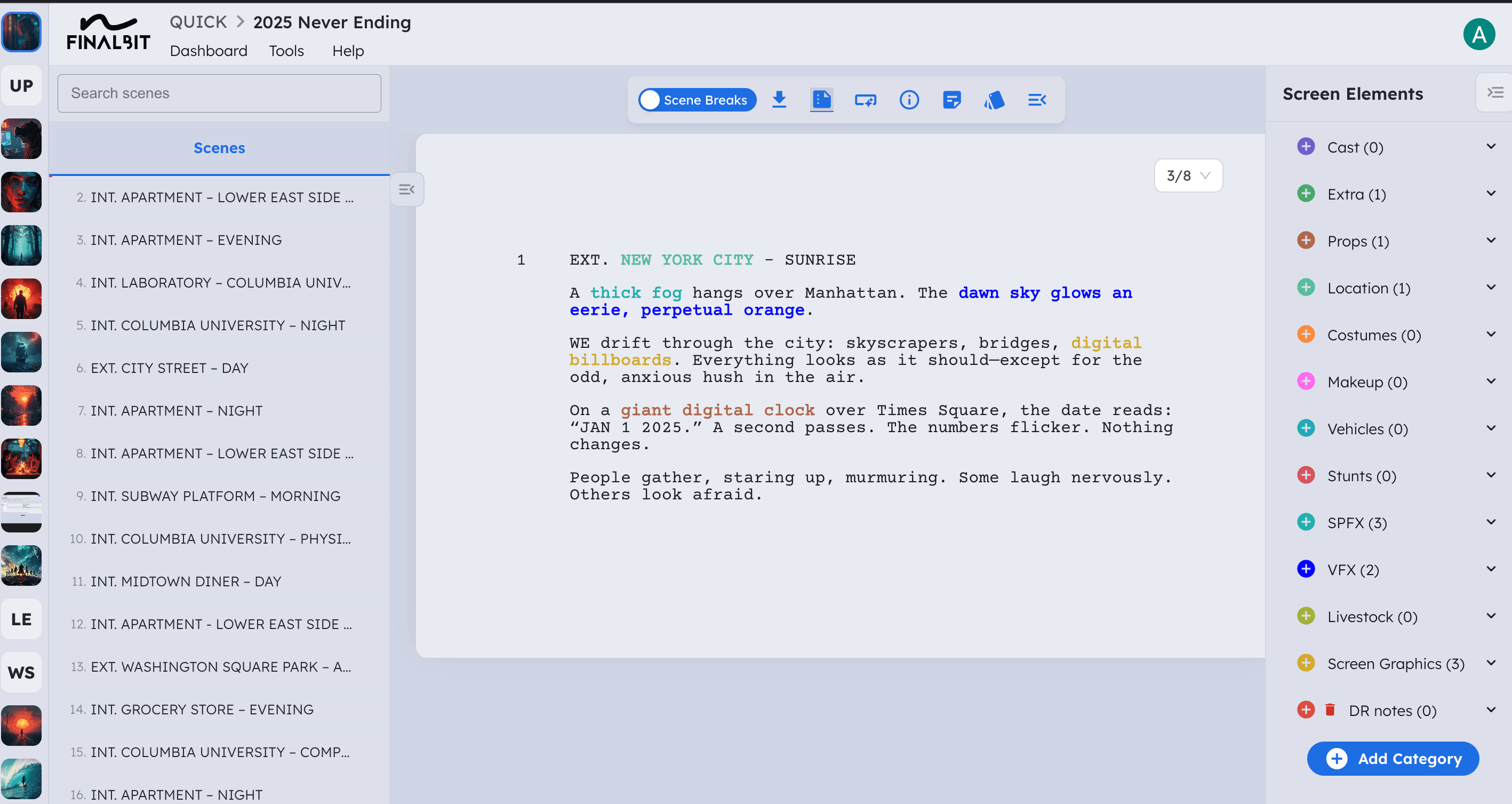
Instead of manually tagging every element, AI-driven systems analyze the screenplay and extract production data automatically—scene by scene, department by department.
What Automatic Script Breakdown Does
Modern tools can:
Scan 100% of a screenplay
Detect scene headings and transitions
Identify characters per scene
Extract locations and set requirements
Tag props, costumes, and special elements
Differentiate day vs night
Organize elements by department needs
What once took hours can now happen in minutes—without sacrificing accuracy.
Key Features to Look for in Script Breakdown Software
When evaluating automatic script breakdown tools, focus on these essentials:
1. One-Click Scene Breakdown
The system should automatically identify and list every scene with clear boundaries and metadata.
2. Character Identification
Each scene should clearly display which characters appear, including dialogue presence and scene notes.
3. Location & Set Analysis
Interior/exterior tags, unique locations, and special set requirements should be extracted automatically.
4. Props & Costume Detection
Props and wardrobe elements should be itemized per scene to support production design and costume departments.
5. Timing & Day/Night Differentiation
Accurate tagging helps with lighting decisions and efficient scheduling.
6. Shooting Schedule & Budget Integration
Breakdown data should seamlessly support scheduling, budgeting, and production planning.
7. Customization
The ability to:
Add custom tag categories
Manage 8ths
Leave per-scene notes
8. Export Options
Support for PDF and FDX exports ensures compatibility with industry-standard tools.
From Breakdown to Unified Production Workflow
The real power of automatic script breakdown emerges when it connects directly to scheduling, budgeting, and production management tools.
Instead of treating breakdowns as static documents, modern platforms allow breakdown data to flow seamlessly across the entire pre-production pipeline—reducing duplication and keeping teams aligned.
This shift transforms script breakdown from a one-time task into a living production foundation.
Final Thoughts: Focus on Story, Not Spreadsheets
Script breakdown will always be essential—but how it’s done has fundamentally changed.
In 2026, the best productions combine:
Industry-standard breakdown principles
AI-powered automation
Unified workflows
The result? Less time spent on repetitive work and more time dedicated to creative decision-making.
Whether you’re an independent filmmaker, producer, or studio team, adopting modern script breakdown best practices is no longer optional—it’s a competitive advantage.