
Screenwriting terminology (formatting)
Updated on


 @finalbitai
 @finalbitai
Screenwriting is a unique form of storytelling with its own set of terms. Understanding these is crucial for writers and film enthusiasts. We'll break down key screenwriting terms, following industry standards becomes second nature.
It simplifies navigation and changes in your script, making mastering visual storytelling more accessible with this combination of knowledge and innovative writing tools.
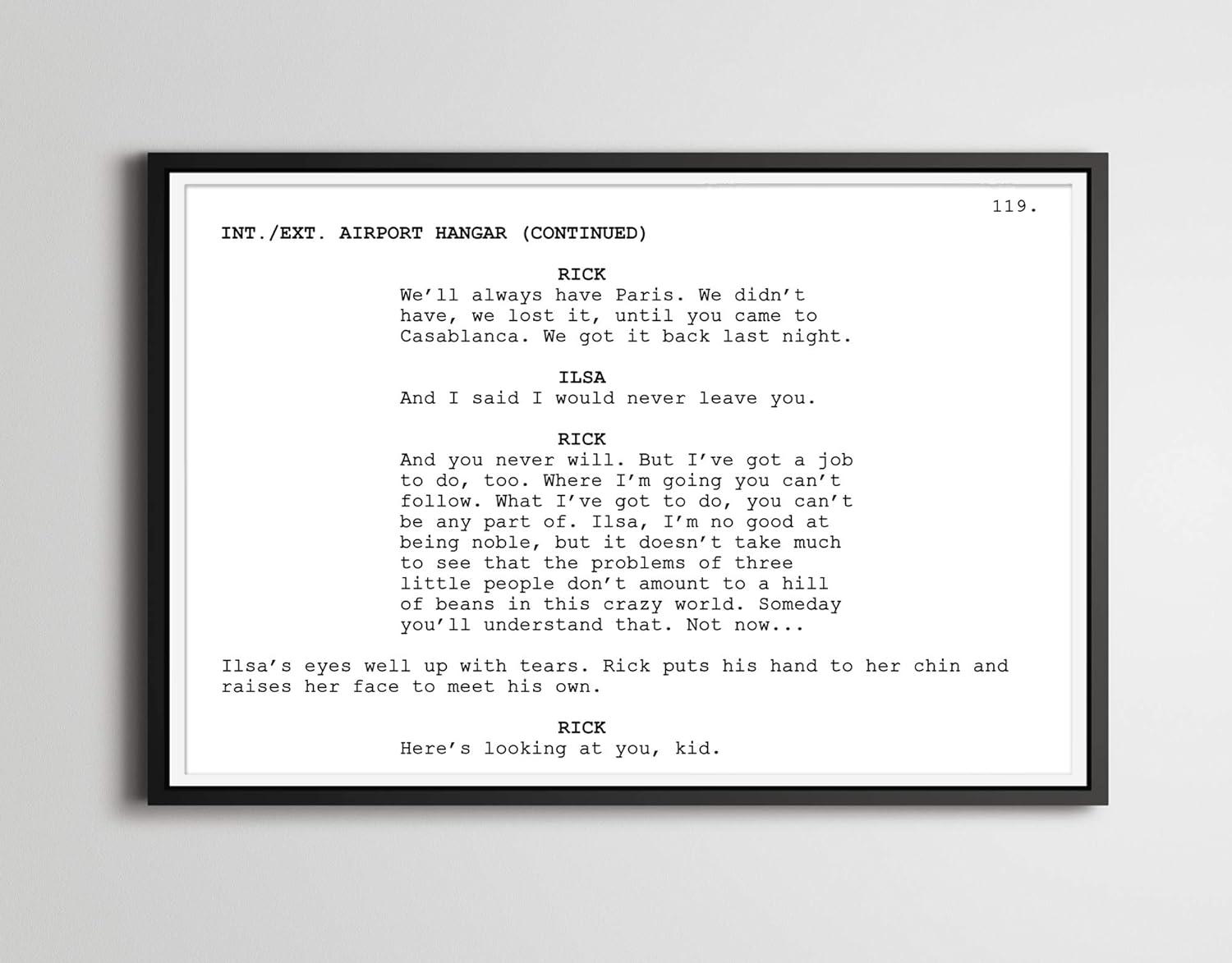
1. Slugline (or Scene Heading):
Definition: Sets the scene with location and time.
Example: INT. LIVING ROOM - NIGHT.
2. Action:
Definition: Describes physical actions, settings, and events.
Example: John paces nervously, glancing at the clock.
3. Character:
Definition: Introduces a character with a name and brief description.
Example: JOHN, mid-30s, mysterious aura.
4. Dialogue:
Definition: Lines spoken by characters.
Example: JOHN: "I can't believe you're here."
5. Parenthetical:
Definition: Additional direction in dialogue.
Example: JOHN (whispering): "Let's get out quietly."
6. Transition:
Definition: Indicates scene changes.
Example: CUT TO: INT. CAFE - DAY.
7. Montage:
Definition: A sequence of brief scenes.
Example: MONTAGE - John trains, studies, perseveres.
8. Flashback/Flashforward:
Definition: Disrupts chronological order.
Example: INT. JOHN'S CHILDHOOD BEDROOM - NIGHT (FLASHBACK).
9. Voiceover (V.O.) / Off-Screen (O.S.):
Definition: Narration or dialogue not on-screen.
Example: JOHN (V.O.): "It all started on a rainy night..."
10. Inciting Incident:
Definition: Sparks the protagonist's journey.
Example: John finds a mysterious letter.
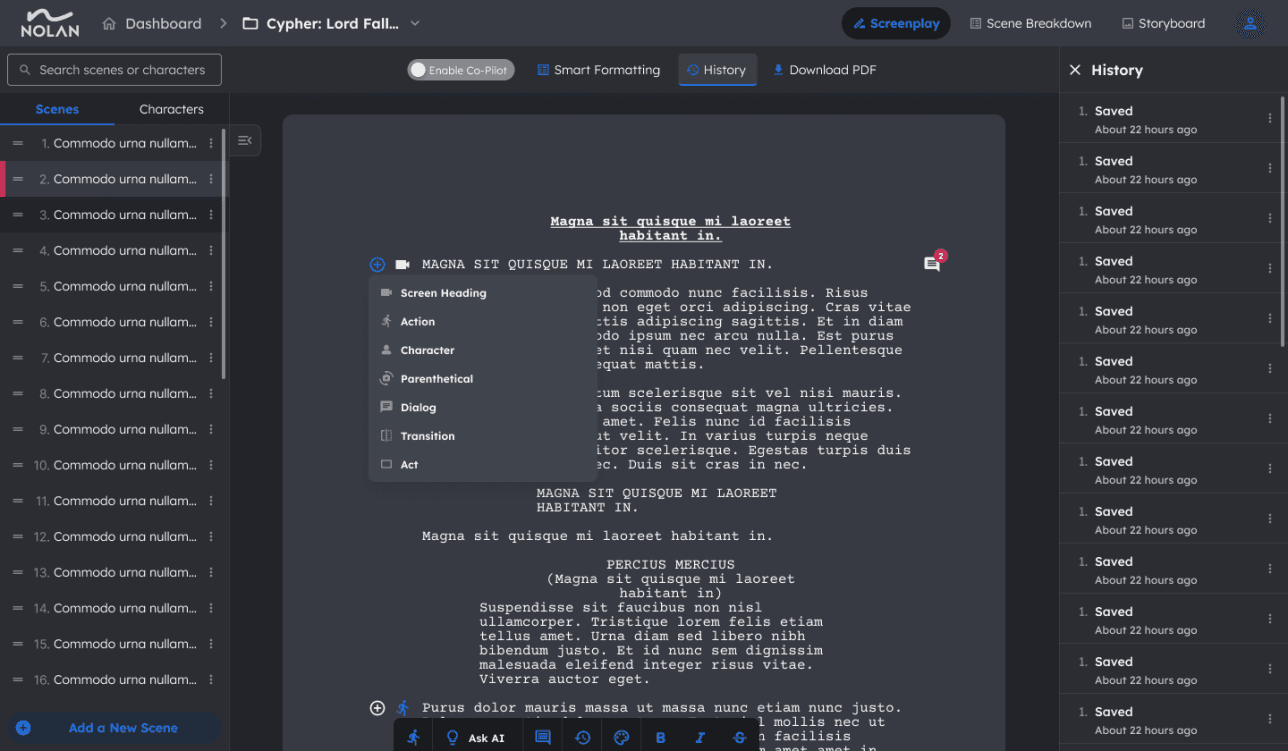
Understanding these terms is key to screenwriting. With the NolanAI: Free Script Writing Software and Editor, following industry standards becomes second nature, simplifying navigation and changes in your script, with the helping of AI guiding and suggesting how to enhance formatting. Mastering visual storytelling is more accessible with this combination of knowledge and innovative writing tools.