
Sinners Script Coverage Review: Inside the Screenplay Behind 16 Oscar Nominations
%2520Medium.jpeg&w=3840&q=75)
Updated on


 @finalbitai
 @finalbitai
Sinners just made history with 16 Academy Award nominations, including Best Picture, and as a filmmaker, it’s impossible not to dissect why it works so well — starting with the script.
Here’s our take on the screenplay, using a structured coverage lens, with my thoughts as someone who breaks down scripts for production and storytelling insight.
Logline Impression
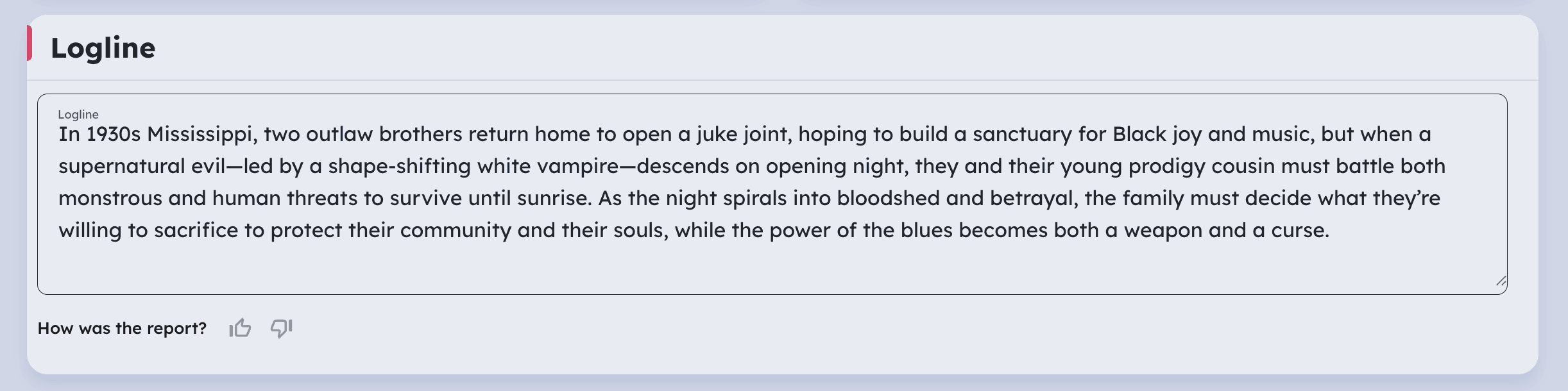
From a filmmaker’s point of view, this is where it all starts. Does the premise grab you immediately? Is it clear what the stakes are? For a script that ends up with a Best Picture nod, the logline has to feel inevitable while hinting at the tension and themes that will carry through 120 pages.
Story & Structure
Sinners presents a sprawling narrative that blends historical drama, supernatural horror, and musical elements against the backdrop of 1930s Mississippi and beyond. The script largely follows a classical three-act format:
Act I: The poetic prologue establishes mythic tone, introduces the juke joint, and sets the stakes.
Act II: Tension rises with vampiric antagonists and social pressures.
Act III: Culminates in a violent, emotionally charged confrontation, followed by a poignant denouement.
The layering of supernatural elements onto historical and cultural realities adds depth, though at times juggling multiple themes diffuses focus slightly. From a filmmaking lens, the story offers rich material for production design, choreography, and emotional beats.
Pacing
The pacing is deliberate, giving room for tension and atmosphere to build. Moments like the juke joint preparations and extended montage sequences could be tightened slightly, but the climax delivers high energy and urgency. For filmmakers, this structure allows both actors and crew to breathe during slower beats while maintaining suspense for the horror elements.

Character Development
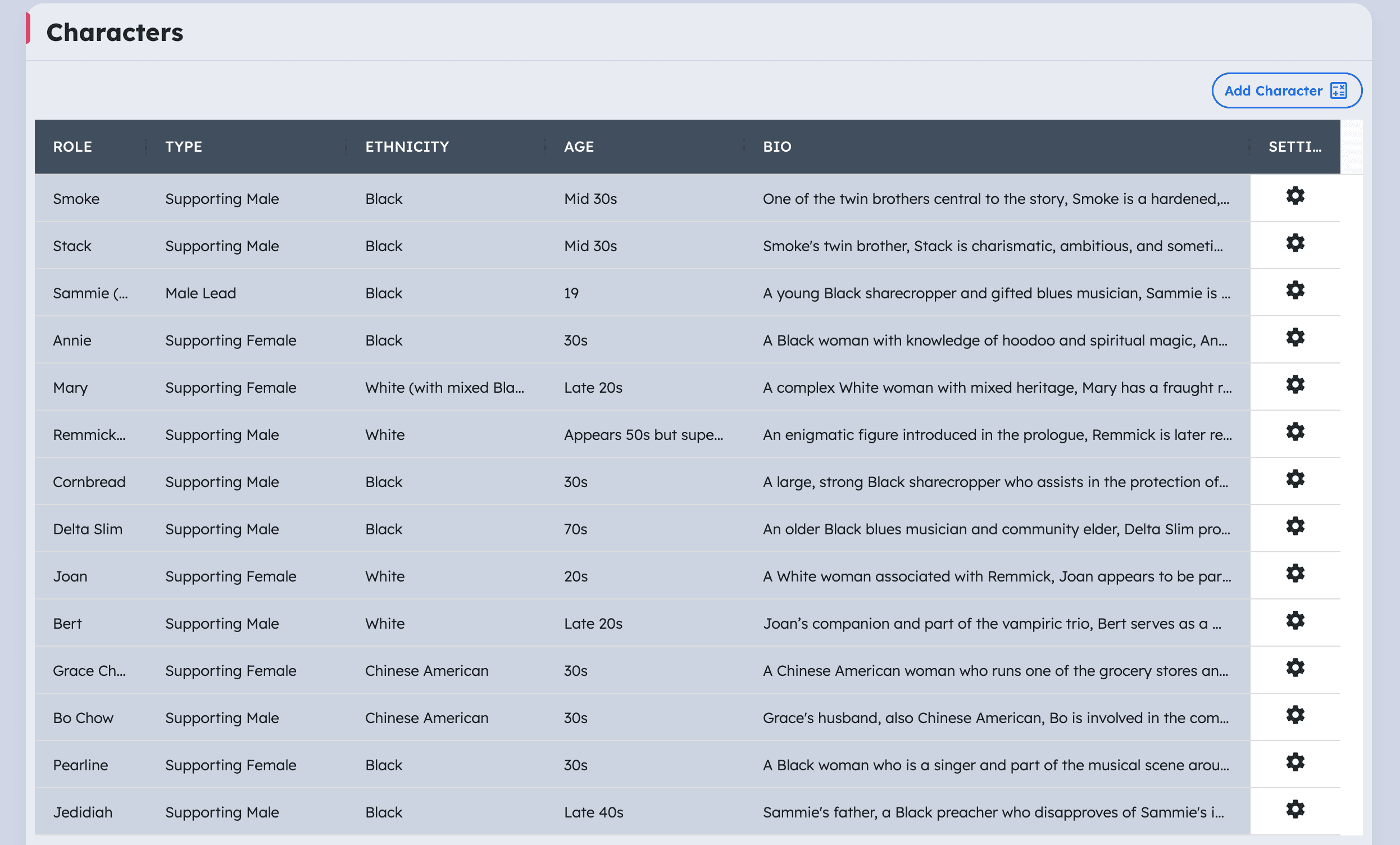
The characters are a standout:
Smoke & Stack (the Smokestack Twins): Complex embodiments of brotherhood, loyalty, and the cost of violent resistance.
Sammie: Serves as a moral anchor, with a journey that feels earned and relatable.
Supporting cast: Annie, Mary, and Delta Slim enrich the cultural and supernatural landscape.
Some symbolic or mythic characters, like Remmick and the vampiric antagonists, function more as thematic devices, which works tonally but slightly reduces their individual complexity. Overall, character arcs provide strong emotional hooks and opportunities for layered performances.
Dialogue Quality
The dialogue feels authentic to the Delta South era, balancing vernacular, blues references, and natural speech rhythms. Occasional exposition-heavy monologues could benefit from trimming or action breaks, but the script excels at weaving culture, humor, and thematic reflection into conversations.
Emotional Impact
Sinners really hits hard emotionally, exploring family, survival, and cultural heritage. Joyful musical sequences juxtaposed with supernatural horror create poignant metaphors. Some scenes could give human drama more breathing room, especially when supernatural elements dominate, but the epilogue and final blues performance deliver a resonant full-circle moment.
Engagement with Intended Audience and Storytelling Techniques
The script speaks to audiences who enjoy historical drama with supernatural and musical layers. Blues music serves as both narrative thread and thematic device, unifying story, character, and culture. Storytelling is grounded in character-driven conflict, clear objectives, and escalating stakes, aligning with principles from Robert McKee, Blake Snyder, and John Truby.
Script Coverage Score
And finally, the over all script score based on FinalBit script coverage.

Curious how modern script coverage works in practice?
Explore how FinalBit’s AI script coverage helps producers and writers evaluate scripts faster without losing creative insight.